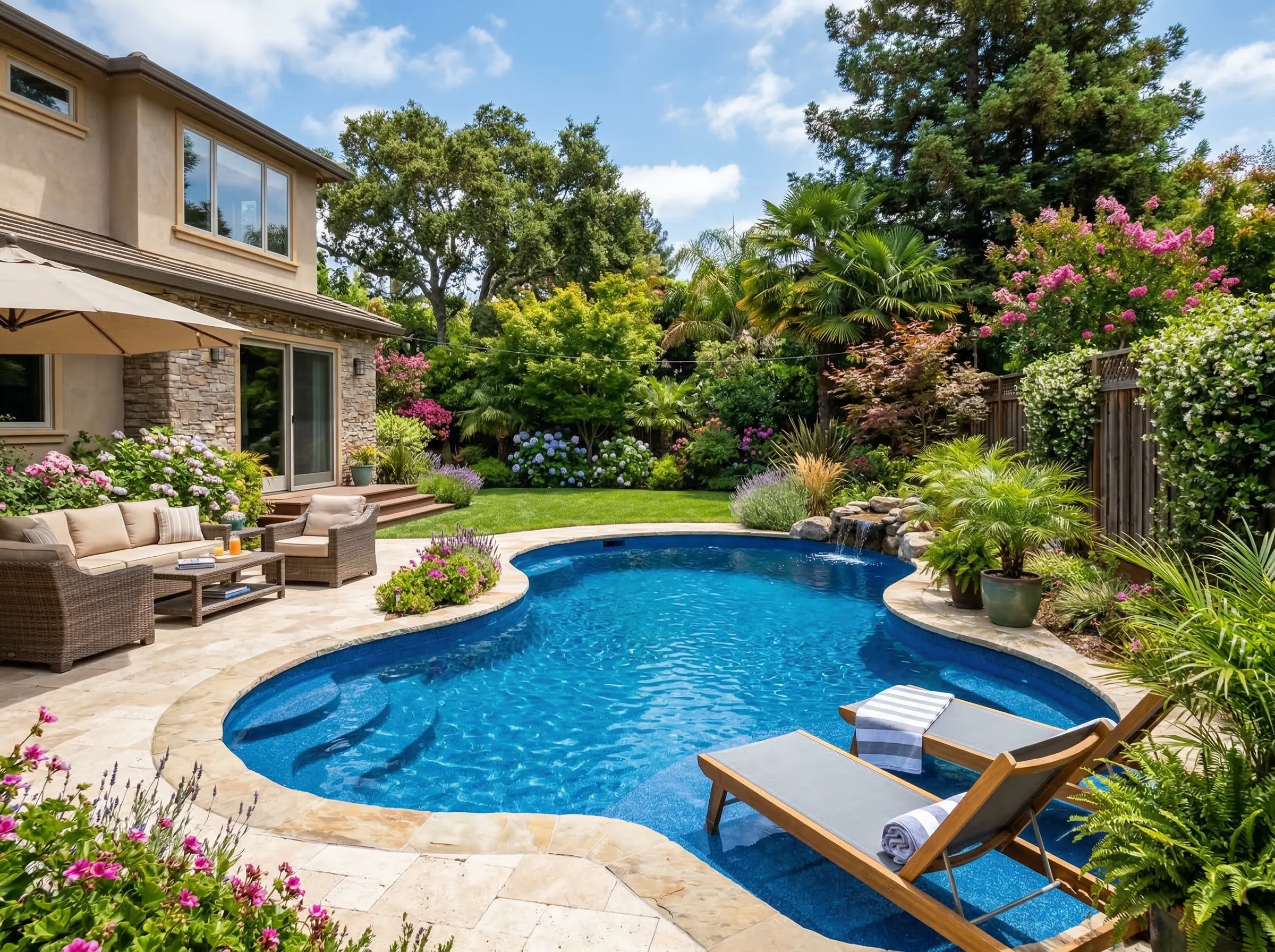
For most New Jersey yards, fiberglass and precast concrete hold up best through freeze-thaw winters with the least recurring work. Gunite concrete lasts longest but needs resurfacing every 10 to 15 years, and vinyl costs least up front but needs a new liner every 6 to 12 years, according to HomeGuide's 2026 inground pool cost guide.
Which pool type holds up best in New Jersey?
Fiberglass and precast concrete need the least ongoing repair in a New Jersey climate. HomeGuide's 2026 guide gives fiberglass a 25 to 30 year lifespan and gunite concrete 50 years or more, while vinyl liners need replacing every 6 to 12 years.
A pool here gets closed every fall and sits through months of freezing and thawing. Rutgers' New Jersey Climate Office puts the average freeze-free season at 217 days along the seacoast and 179 days in the central and southern interior, so a yard near the ocean in Monmouth or Ocean County freezes for a shorter stretch than one inland near Freehold, but both get real winters.
Here's where we land. If the pool you want fits inside a 16-foot-wide shell, fiberglass is the easiest pool to own in New Jersey. If you want concrete without a months-long build, look at precast. Gunite makes sense when no factory mold matches the shape you want, and vinyl makes sense when budget is the hard limit. We install fiberglass and precast concrete, not vinyl or gunite, and we'll still tell you when one of those fits your yard better.
How each pool type is built
The four pool types differ in where the shell gets made. Fiberglass and precast concrete shells are built in a factory and set in one piece. Gunite concrete is sprayed over steel rebar in your yard and cured on site. A vinyl pool is a framed hole with wall panels and a custom-cut liner.
Fiberglass
A fiberglass pool is a one-piece shell molded in a factory, with a gelcoat finish on the inside. It arrives on a truck and is lifted into the hole. On our fiberglass pool installation page for Monmouth County we describe how the shell sits on a compacted crushed-stone base and is backfilled with stone as the pool fills with water.
Gunite and shotcrete concrete
Gunite and shotcrete are two ways of spraying concrete. The crew ties steel rebar in the hole, sprays concrete over it, lets it cure and finishes the inside with plaster, pebble or tile. Because the shell is formed on site, it can take nearly any shape or depth.
Vinyl liner
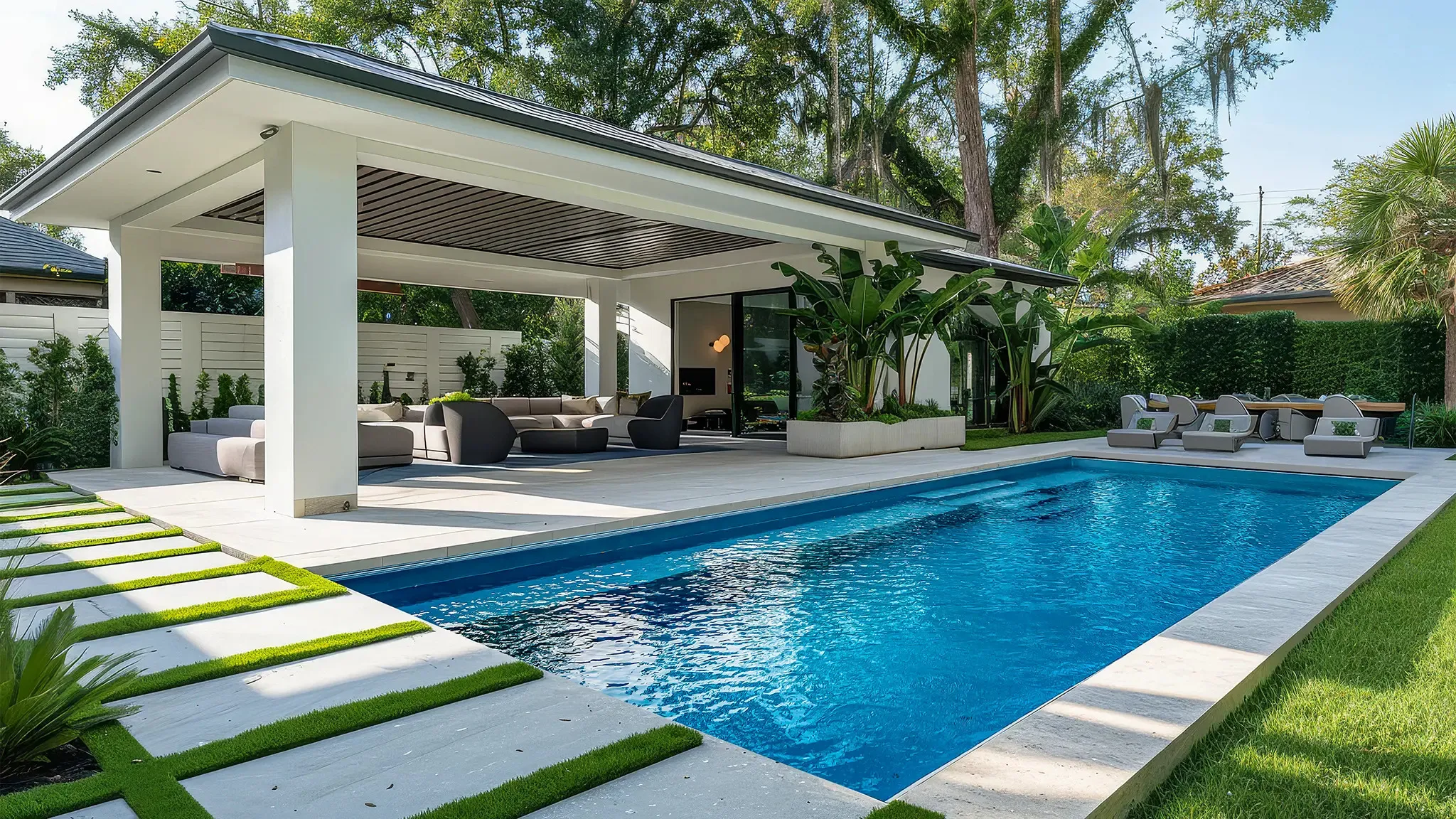
A vinyl liner pool has wall panels around a shaped floor, covered by a custom-cut vinyl sheet held in a track at the top. That liner is both the waterproof layer and the surface you touch, and it's the part you'll replace.
Precast or prefab concrete
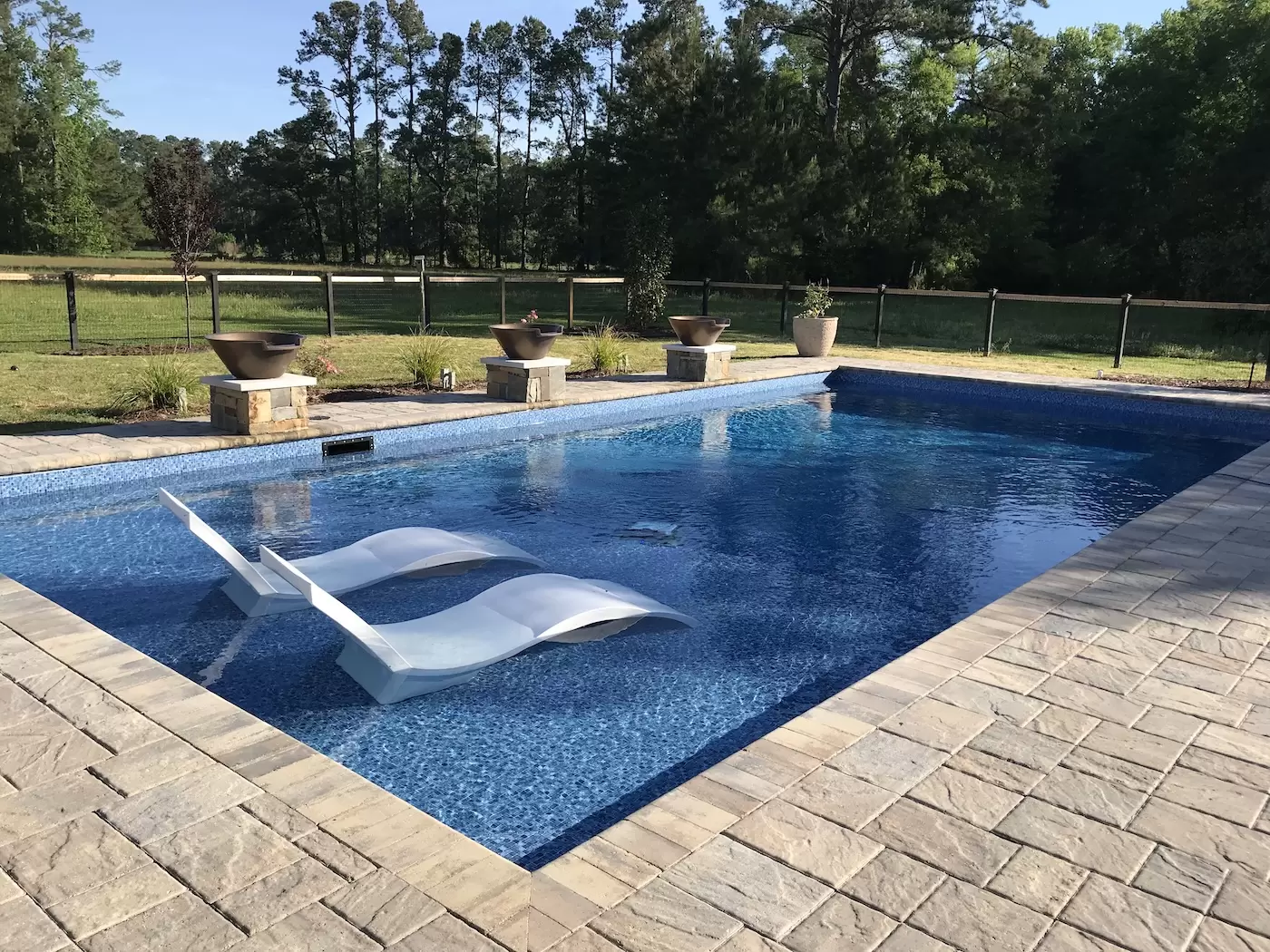
A precast concrete pool is cast in a factory around steel rebar and cured there before it ships. Our prefab concrete pool page notes the shells weigh around 30,000 pounds, a crane sets each one in a day, and each sits on a crushed-stone sub-base with subsurface drainage.
Fiberglass vs. concrete vs. vinyl: side-by-side comparison
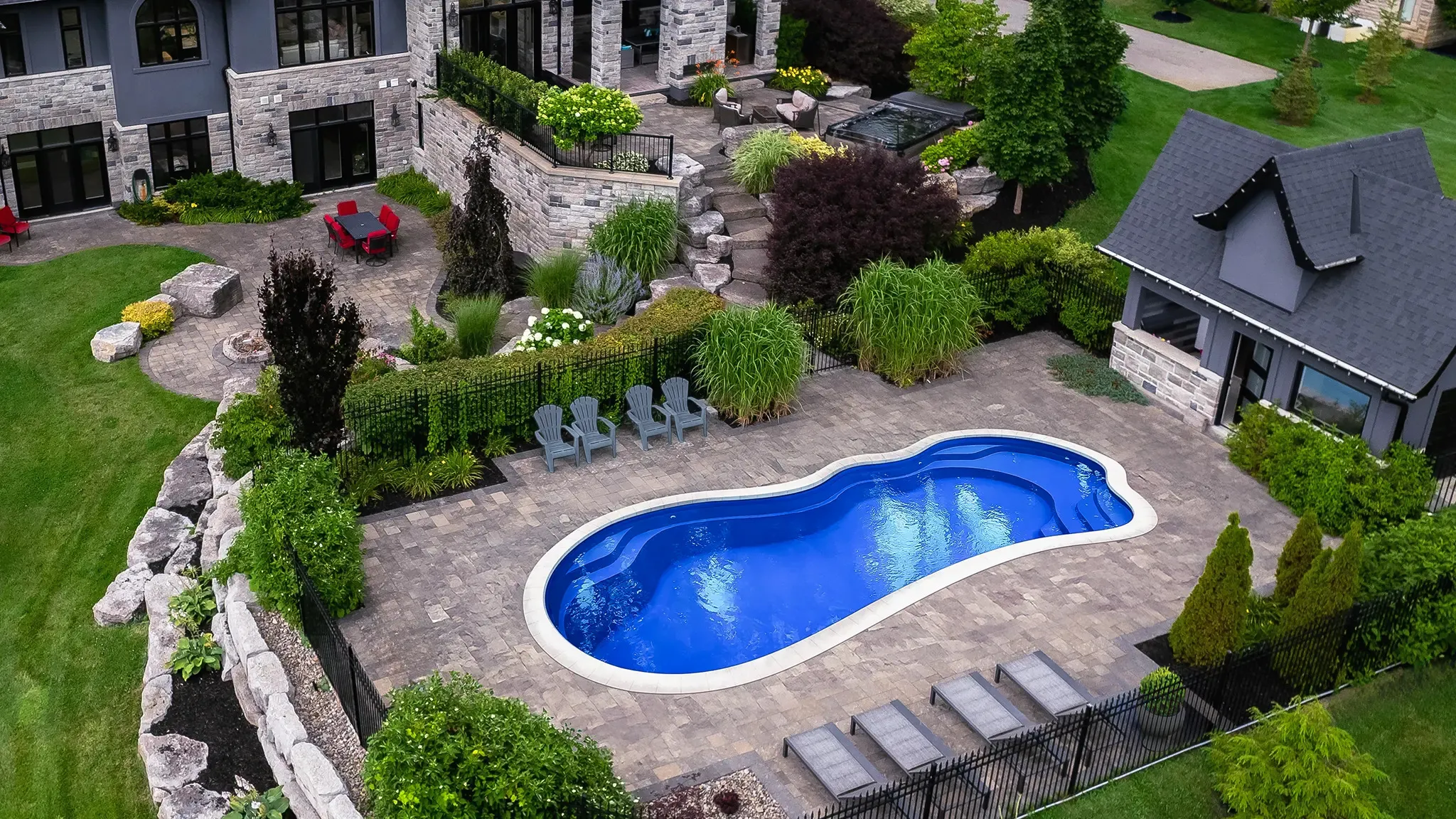
The biggest differences between the four types show up in install time, recurring surface work and cost. Fiberglass and precast go in fastest, and fiberglass needs the least resurfacing. Gunite takes months and gets resurfaced every 10 to 15 years. Vinyl is cheapest to build but needs a liner every 6 to 12 years, per HomeGuide.
| Pool type | Install time | Recurring surface work | Typical lifespan | Size and shape | Installed cost (HomeGuide 2026) |
|---|---|---|---|---|---|
| Fiberglass | 2 to 4 weeks for shell and plumbing once digging starts (Baur Pools) | Gelcoat; HomeGuide puts refinishing around every 10 years, River Pools says a few decades | 25 to 30 years (HomeGuide) | Set molds; usually no wider than 16 ft or longer than about 40 ft | $45,000 to $100,000 |
| Gunite concrete | 4 to 6 months (Baur Pools) | Resurface every 10 to 15 years at $8,000 to $10,000; acid wash every 3 to 5 years | 50+ years (HomeGuide) | Any shape or depth | $50,000 to $120,000 |
| Vinyl liner | About 4 to 6 weeks (River Pools) | New liner every 6 to 12 years at $3,000 to $7,500 | 20+ years for the structure (HomeGuide) | Many shapes; custom liners cost more | $35,000 to $80,000 |
| Precast concrete | Shell set by crane in 1 day, then a few weeks of finish work (Baur Pools) | Depends on the interior finish | No cost-guide figure yet | Set factory sizes | Not listed separately; quoted after a site visit |
The sources disagree on fiberglass refinishing, and the cost guides we checked don't list precast concrete separately, so the table says that instead of guessing.
How long does each pool take to install?
Fiberglass and precast concrete are the fastest. Our fiberglass page puts shell placement and plumbing at two to four weeks once excavation begins, and a precast shell is set by crane in one day. Gunite builds often run four to six months, and River Pools puts vinyl at around four to six weeks.
Speed matters more in New Jersey than in warm states because the swim season is short. A gunite pool that breaks ground in spring can eat most of the summer before anyone swims.
Our prefab page compares a few weeks of finish work after the crane day with five to eight months for a standard poured pool. All of these timelines start after permits, and township review in places like Holmdel, Middletown or Wall Township adds its own wait. Our guide on how long it takes to install an inground pool in NJ walks through the whole calendar, and the pool installation process page covers the four steps from consultation to final walkthrough.
What freeze-thaw winters do to each pool
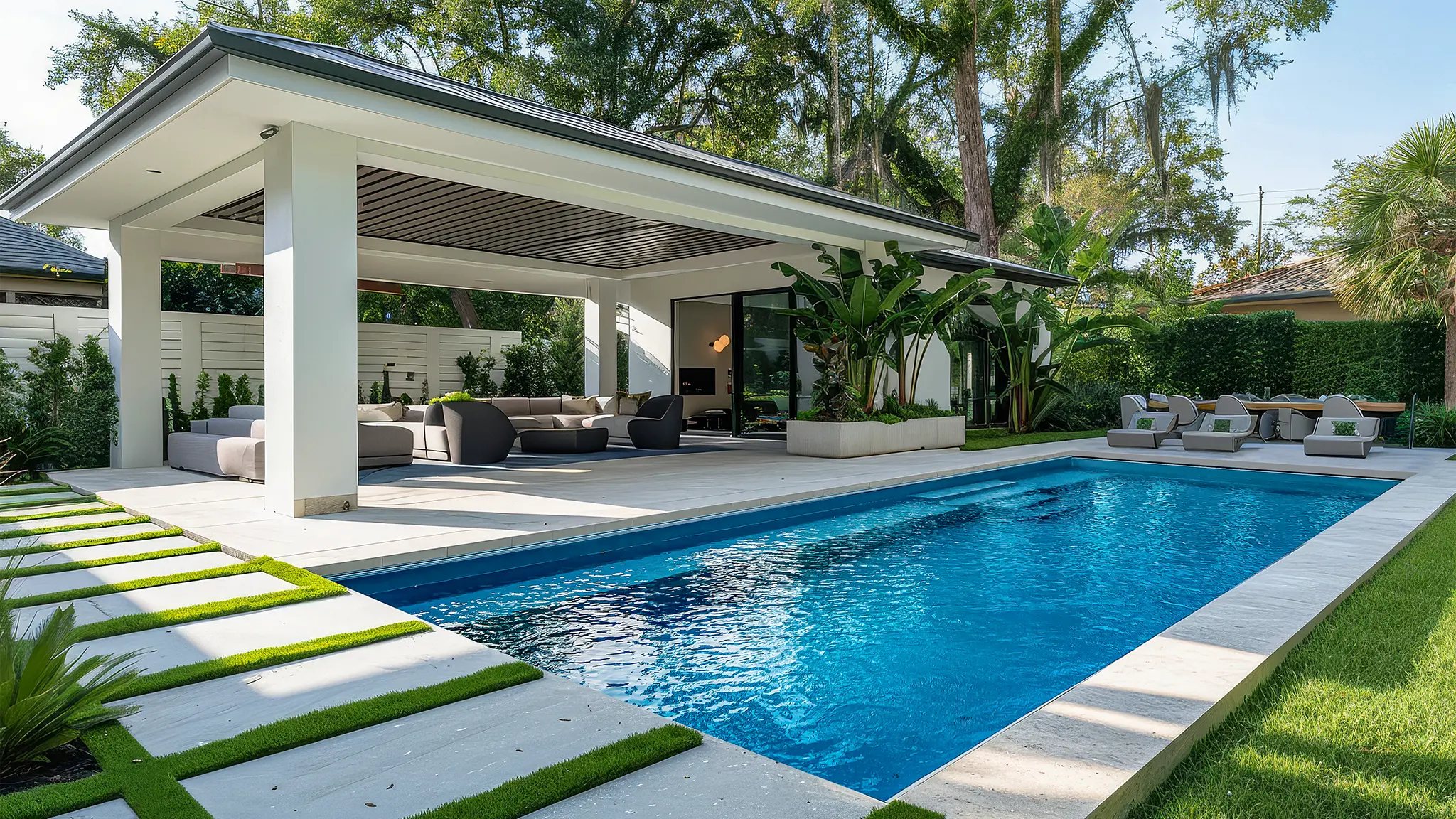
A properly winterized fiberglass pool doesn't crack from freezing water, according to River Pools, because ice expands upward and the shell sits in drained crushed stone. Concrete is rigid, so it depends on good closing habits. Vinyl liners survive winter fine as long as the water level stays up.
The bigger risk is water in the ground freezing and thawing, which moves soil. River Pools describes frost heave as ground movement from those freeze-thaw cycles and says a fiberglass shell encased in 3/4-inch clean crushed stone drains well enough that there's little trapped water to expand. It adds that concrete can struggle to flex with temperature swings.
For concrete, HomeGuide lists an acid wash every 3 to 5 years and full resurfacing every 10 to 15. A gunite pool that's closed well can still last 50 years or more; it just costs more to keep looking new.
For vinyl, the winter risk is water level. If the level drops too low, River Pools says a liner can bubble and float inside the pool.
Closing tip for any pool: lower the water a few inches, but never below the bottom of the skimmer. Blow out the lines, plug them and use freeze protection on the equipment.
Not sure which shell fits your yard?
We'll check your soil and drainage and show you which models fit. Baur Pools quotes after a site visit.
Book a free consultation Call 908-554-4647High groundwater and why you never drain the pool
In wet soil, groundwater pushes up on a pool from below, and only the weight of the water inside holds it down. River Pools says it plainly: "Do not drain your pool." Concrete pools can float, vinyl liners can bubble and lift, and fiberglass can pop up, though River Pools calls that uncommon in its experience.
This is hydrostatic pressure. River Pools says sandy soil, like the ground near the shore in Toms River, drains well, while clay holds water the longest. Either way, after heavy rain or snowmelt the ground around a pool can be full of water pushing up on the floor.
River Pools warns that even lowering the water below the skimmer can be enough to cause damage, and it recommends a dewatering system so groundwater can be checked and pumped out. Our precast installs use a crushed-stone sub-base with subsurface drainage for that reason. If you ever need to drop the water for a repair, call a pro first. Our pool installer page for Toms River covers how we plan for shore soils, and our guide to building a pool near the Jersey Shore goes deeper on water tables and flood zones.
Surface feel, algae and chemical use
Fiberglass gelcoat is smooth and non-porous, and River Pools says it doesn't harbor algae the way porous surfaces can. Concrete plaster has a rougher texture, and River Pools' ten-year numbers show concrete costing the most to keep clean and running. Vinyl is soft underfoot.
River Pools puts ten years of chemicals and power for fiberglass at around $4,000. Its ten-year total for vinyl is over $11,000 including liner replacements, and for concrete it's over $27,000 including resurfacing. River Pools makes fiberglass pools, so read that as one manufacturer's math. HomeGuide puts average monthly maintenance at $80 to $150 depending on the material.
If you want the look of tile without a concrete build, our luxury tiled models have a porcelain tile waterline, and the Ceramic with Bench model is fully tiled, from 14'2" to 34'5" long. You can see every finish and color on the pool styles page.
Size and shape limits, including the 16-foot fiberglass cap
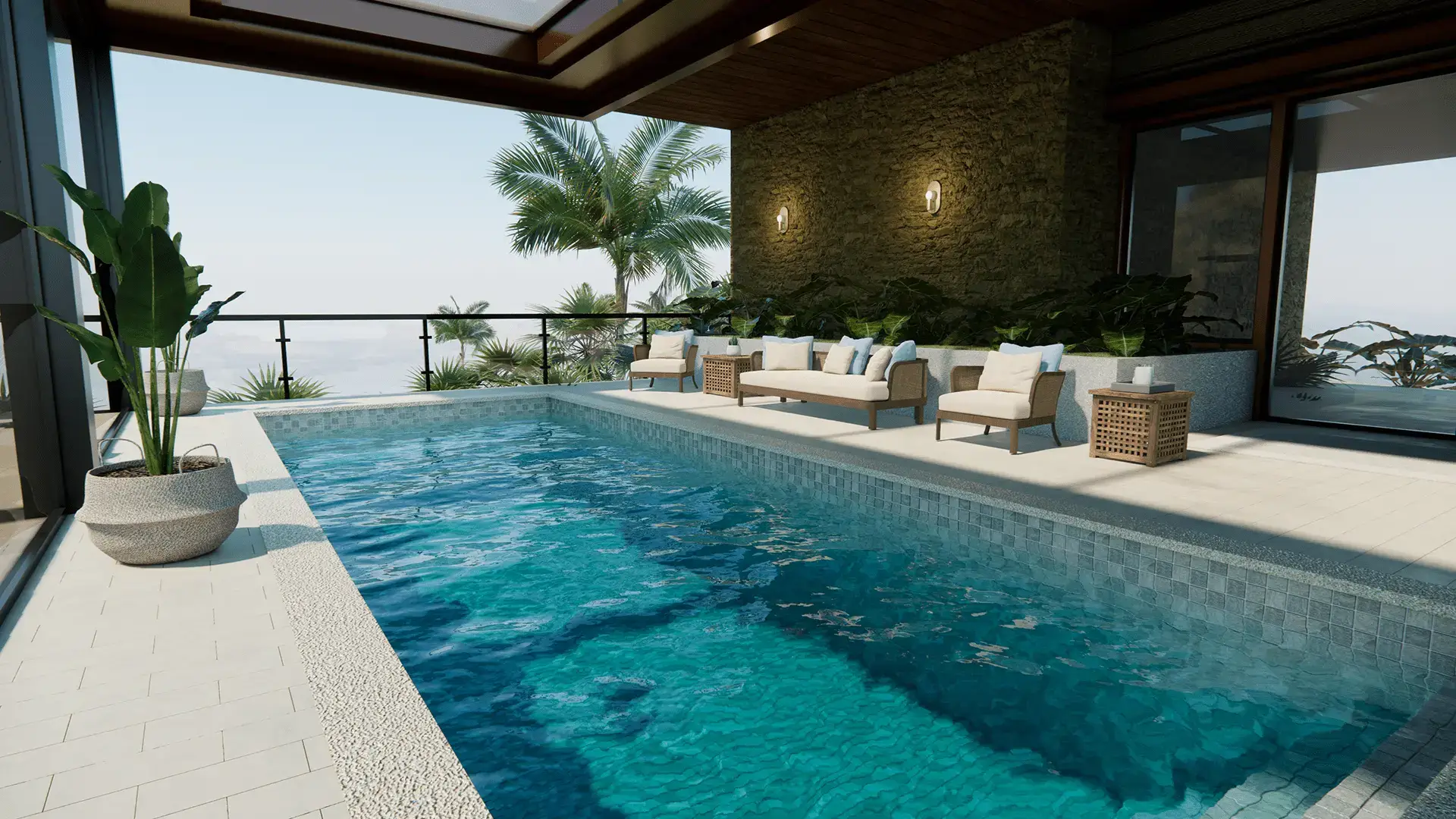
Fiberglass shells usually top out at 16 feet wide because they ship on highways, and River Pools says most wide-load laws keep anything wider than 16 feet off the road. Lengths usually stop around 40 feet. Gunite can be any shape or size, and vinyl liners come in many shapes, with custom kits costing more.
Our widest fiberglass model, the Sequoia, is 40 by 16 feet with an 8'1" deep end, right at that shipping limit. The El Capitan and Everest come in 30, 35 or 40 foot lengths at about 15 and a half feet wide.
If you want something wider than 16 feet or an odd shape for a tight Red Bank lot, gunite is the honest answer. Precast concrete sits in the middle: factory sizes like fiberglass, with concrete's weight. Our concrete plunges run from a 4 by 4 foot cold plunge to the 13 by 7 foot Full Plunge. Browse all fiberglass and concrete pool sizes before your consultation so you know what fits.
What each pool costs up front and over time
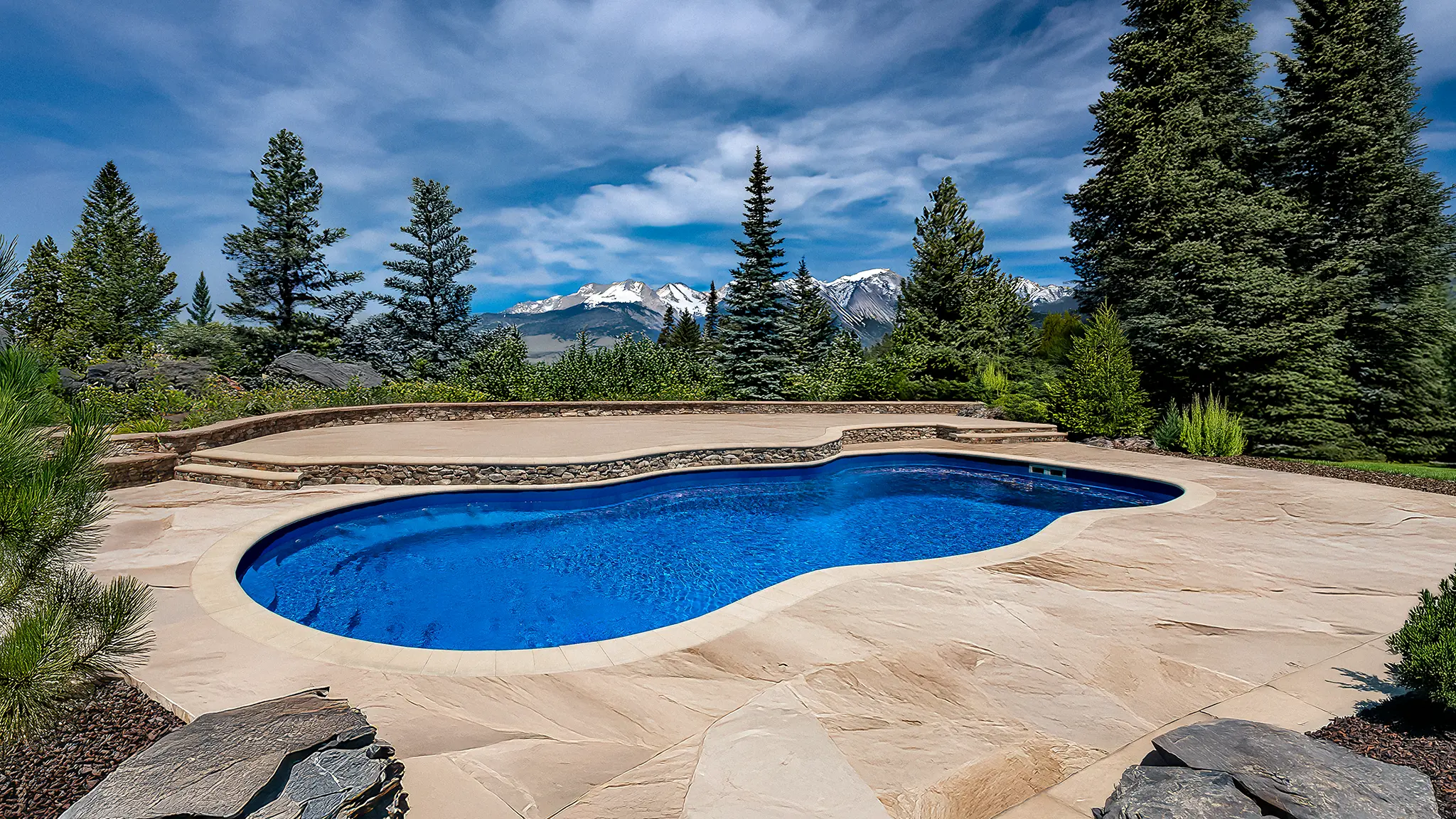
HomeGuide's 2026 guide puts installed costs at $35,000 to $80,000 for vinyl, $45,000 to $100,000 for fiberglass and $50,000 to $120,000 for gunite concrete. HomeAdvisor's ranges run higher at the low end: $40,000 to $75,000 for vinyl, $55,000 to $100,000 for fiberglass and $65,000 to $120,000 for concrete.
The bigger gap shows up after year one. HomeGuide lists vinyl liner replacement at $3,000 to $7,500 every 6 to 12 years, and HomeAdvisor says a new inground liner can pass $4,000 once materials are added. For concrete, HomeGuide prices resurfacing at $8,000 to $10,000 every 10 to 15 years, plus acid washes at $300 to $1,000 every 3 to 5 years.
Fiberglass costs more than vinyl at install and less to keep; its main long-term cost is refinishing the gelcoat someday. The guides we checked don't list precast concrete separately. Baur Pools quotes after a site visit, once we've seen the access, soil and drainage. Our inground pool cost guide for Monmouth County breaks down the full budget.
Every pool type also needs the township permit, often a grading plan, an electrical permit and a fence inspection, and we handle that paperwork. For a list of where we work, see our Monmouth and Ocean County service areas.
Who each pool type is right for
Each of the four types has a homeowner it suits. Fiberglass fits people who want low upkeep and a fast build within a 16-foot width. Precast concrete fits people who want concrete without a long build. Gunite fits custom shapes and big budgets. Vinyl fits tight budgets that can plan for liners.
Choose fiberglass if
You want to swim the same summer you break ground and one of the factory shapes fits your yard. Our fiberglass inground pools come in eight colors, from Abyss Blue to Stellar Black, and include models with built-in spas and infinity edges.
Choose precast concrete if
You want concrete, often a small pool or plunge, without a five-to-eight-month build. Read more on factory-built prefab concrete pools.
Choose gunite concrete if
You need a shape or size no mold makes, like a pool wider than 16 feet or one built into a slope. Plan for a months-long build and regular resurfacing. A gunite builder is the right call there.
Choose vinyl if
The up-front number decides it and you can budget for a new liner every decade or so.
Whatever you pick, the crew matters. We limit how many projects run at once, so you deal directly with the people building your pool. You can see finished work in our pool project gallery, read more on the about Baur Pools page, and look at inground pool options for Monmouth County. Once the pool is in, our sister company Baur Lawns handles landscaping around the pool.
See fiberglass and prefab concrete side by side
Tell us how you want to use the pool. We'll measure the yard and walk you through the models that fit.
Book a free consultation Call 908-554-4647Frequently asked questions
Which inground pool is best for New Jersey winters?
Fiberglass and precast concrete need the least winter repair work in New Jersey. Fiberglass has a non-porous gelcoat and sits in drained crushed stone, so freeze-thaw cycles do little to it. Gunite concrete lasts longest but needs resurfacing every 10 to 15 years, and vinyl liners need replacing every 6 to 12 years, per HomeGuide.
How long does a fiberglass pool last in NJ?
HomeGuide's 2026 guide puts fiberglass pool lifespan at 25 to 30 years, and HomeAdvisor says some last past 30. The gelcoat may need refinishing at some point; HomeGuide says about every 10 years, while River Pools says most go a few decades. Proper winter closing keeps the shell in good shape.
How often do you replace a vinyl pool liner?
HomeGuide says vinyl liners usually need replacing every 6 to 12 years, at $3,000 to $7,500 each. HomeAdvisor puts it at about every 10 years and says a new inground liner can pass $4,000 with materials. Keep the water level up through New Jersey winters, since River Pools says a low level can let a liner bubble and float.
Why are fiberglass pools only 16 feet wide?
Fiberglass pools are built in a factory and shipped by truck, and River Pools says most wide-load laws keep anything wider than 16 feet off the highway. That's why most shells stop at 16 feet wide and about 40 feet long. The Sequoia model, at 40 by 16 feet, sits right at that limit.
Should I drain my pool for winter in New Jersey?
No. River Pools says not to drain your pool, because groundwater can push an empty or low shell up out of the ground. Concrete pools can float, vinyl liners can lift, and fiberglass can pop. For winter, lower the water just a few inches and keep it above the bottom of the skimmer.
Who installs fiberglass pools near me in Monmouth County?
Baur Pools installs fiberglass and prefab concrete pools across Monmouth and Ocean County, including Holmdel, Rumson, Colts Neck, Marlboro, Red Bank and Toms River. The process runs from consultation and yard measuring through design, construction and a final walkthrough, and we handle township permits and inspections. Call 908-554-4647 to book a consultation.
More pool guides for New Jersey homeowners
Sources
- HomeGuide, How Much Does An Inground Pool Cost? (2026)
- HomeAdvisor, How Much Does an In-Ground Pool Cost?
- Office of the New Jersey State Climatologist at Rutgers, The Climate of New Jersey
- River Pools, Biggest and smallest sizes for fiberglass pools
- River Pools, Hydrostatic pressure and your pool
- River Pools, Are fiberglass pools good for cold climates?
- River Pools, Inground pool comparison: vinyl liner vs. concrete vs. fiberglass
- River Pools, What is the life expectancy of a fiberglass pool?
